BEHIND CLOSED DOORS: IDENTIFYING & STOPPING TRAFFICKING IN RENTAL PROPERTIES
By The Canadian Centre to End Human Trafficking
Human trafficking can happen to anyone, but in Canada, it’s most often experienced by people facing systemic barriers and social vulnerabilities. These vulnerabilities can make it harder to find safe housing, access support, or leave an exploitative situation.
Education and awareness are key to prevention. Knowing the signs of trafficking, and what to do if you spot them, can help keep our communities, including your tenants, safe.
It’s not always obvious when someone is being trafficked. At its core, trafficking is about control. Traffickers use force, fraud or coercion to exploit people for profit, often by taking advantage of someone’s need for safety, income, or a sense of belonging.
In Canada, the most reported form of human trafficking is sex trafficking, which disproportionately affects women, youth, and gender-diverse people. Labour trafficking is also a serious concern, particularly among migrant workers who may be isolated, underpaid, or living in inhumane conditions with little power to speak out or leave.
Data collected by the Canadian Centre to End Human Trafficking, a national charitable organization working to end all forms of trafficking in Canada, indicates that trafficking happens in communities of all sizes: from the largest urban centres to the smallest rural hamlets.
Some traffickers will move people frequently to avoid suspicion, rarely staying in one place long enough to raise red flags. One major trafficking corridor runs from Halifax through Montreal, Ottawa, and Toronto, stretching as far as the prairies and West Coast. But not all trafficking involves movement. Other traffickers may stay in the same location and exploit people in a single community, sometimes for months or even years.
Traffickers are increasingly using online platforms to recruit, advertise, and exert control. Social media, dating apps, ride-sharing services and short-term rental platforms can all be misused to enable trafficking. These platforms have made it easier for traffickers to hide behind fake identities, appear credible and trustworthy, and gain trust with the intent of using the property to facilitate trafficking.
Rental properties can be attractive to traffickers because they offer privacy, frequent turnover, and limited oversight. As a landlord or property manager, you’re in a key position to help disrupt this form of exploitation. Your awareness can make a meaningful difference for your tenants and the broader community.
Sex trafficking isn’t always easy to spot, so it helps to know what to look for. One sign on its own might not mean that trafficking is happening, but when several happen together, they may point to someone being controlled or exploited.
Common Warning Signs
- Being controlled by others, driven to-and-from locations;
- Being monitored, escorted and watched by others;
- Doesn’t have access to their own passport or other forms of ID;
- Doesn’t have control of their own money or mobile phone;
- Isn’t familiar with the neighbourhood where they live or work;
- Moves frequently; claims to be “new” or “just visiting”;
- Isn’t allowed to contact family or friends;
- Lies about their age or uses a fake ID;
- Provides scripted or rehearsed answers to casual questions;
- Has excess cash or items inconsistent with their financial means;
- Is frequently absent from home, school or other activities.
Putting clear anti-human trafficking policies and protocols in place is an important step toward keeping your property, and tenants, safe. Measures like thorough tenant screening and mandatory staff training not only help prevent exploitation, but also contribute to safer, more informed communities.
The Canadian Centre to End Human Trafficking works with individuals, organizations, and businesses to provide customized training and education on the realities of trafficking. The centre also operates the Canadian Human Trafficking Hotline, a confidential, multilingual service available 24/7 to connect victims, survivors and communities with social services, law enforcement, and emergency services.
If you’re concerned about something you’ve seen or simply want to better understand what to watch for, the hotline is always here to help.
How Landlords and Property Managers Can Help
- Connect with local anti-trafficking organizations like the centre to learn more about the issue and how to spot possible human trafficking.
- Implement annual anti-human trafficking awareness training for management, maintenance staff and security personnel.
- Develop a policy for suspected trafficking situations so staff and tenants feel supported and empowered if they encounter a trafficking situation.
- Post the Canadian Human Trafficking Hotline’s free awareness materials in common spaces and property management offices. This ensures that anyone seeking information, support or resources knows where to turn.
- Use thorough screening practices to verify the identity of prospective tenants, especially when applying online. Conduct regular check-ins and required unit inspections, and work to foster a shared sense of safety and responsibility within the property.
Traffickers rely on privacy, inaction and silence. But with training, clear policies, and an informed team, you can make your properties harder to exploit and safer for everyone who lives and works there.
By The Canadian Centre to End Human Trafficking
The Canadian Centre to End Human Trafficking is a national charity dedicated to ending all types of human trafficking in Canada. Call the Canadian Human Trafficking Hotline at 1-833-900-1010, available 24/7/365 and in over 200 languages. To learn more, contact info@ccteht.ca.
Additional Resources
- Promotional Materials for the Canadian Human Trafficking Hotline (Printable Postcards, Posters, & Business Cards)
- It’s Time to T.A.L.K. (A Guide to Improve Understanding of Sex Trafficking and How to Have Conversations About it)
- Attainable Housing: Preventing Human Trafficking & Supporting Survivors (2024 Joint Written Submission to the Government of Saskatchewan)
- ECPAT International Training for Short-Term Rental Hosts around Child Exploitation (launched ahead of FIFA)
RHSK Announces Finalists for the 2026 Rental Housing Awards presented by Yardi, Winners to be Revealed at Conference
SASKATOON, SK — Rental Housing Saskatchewan (RHSK) is proud to announce the finalists for the 2026 Rental Housing Awards, presented by Yardi. Every year, RHSK members raise the bar for excellence in Saskatchewan’s rental housing industry, and this year’s finalists reflect outstanding customer service, leadership, innovation, and community impact.
This year’s awards program drew a strong field of nominations from across the province, with members putting forward individuals, teams, and companies who went above and beyond over the past year. Finalists were selected across all categories, and winners will be announced at the Rental Housing Awards Luncheon October 8 during this year’s sixth annual Rental Housing Conference in Saskatoon.
“Awards season is genuinely one of the best times of year for us,” said RHSK CEO Landon Field. “It’s when we get to step back from the day-to-day and see all of the great things happening across our membership. The ways our rental housing providers, property managers, and teams are serving the public, supporting their residents, and strengthening our communities. Every nomination we received is a reminder of just how much talent and dedication exists in Saskatchewan’s rental housing industry, and this year’s finalists truly represent the best of it.”
2026 Finalists
(Listed alphabetically within each category)
On-Site Employee of the Year
- Justice Essien, Deveraux Apartment Communities
- Moriel Tambua, Avenue Living
- Helena Thiessen, Allerdyce & Co.
Off-Site Employee of the Year
- Amber Baumgartner, Deveraux Apartment Communities
- Marilou Bervgevin, Avenue Living
- Mikayla Brookins, Melchior Management
- Kirstin Halliday, Colliers
- Brandi Samoleski, Tamarack Properties
- Ashleigh Tichkowsky, Envision Real Estate Services
Excellence in Customer Service Award
- Gloria Abraham, Colliers
- Fahim Patel, Deveraux Apartment Communities
- Jennifer Patterson, Realty Executives
- Sagar Somi, Avenue Living Residential
Individual Property Manager of the Year
- Lindsay Josephs, Colliers
- Alexandra Mehra, Deveraux Apartment Communities
- Daria Ryzhkova, Avenue Living
Property Management Company of the Year
- Envision Real Estate Services
- Tamarack Properties
Community Impact Award
- Deveraux Apartment Communities
- Envision Real Estate Services
- Tamarack Properties
Executive Leader of the Year
- Carla Browne, Envision Real Estate Services
- Pamela Hank, Tamarack Properties
- John Knoch, Jubilee Residences
- Naomi Picard, Deveraux Apartment Communities
Rental Development of the Year
- College Station, Eastlake Group
- The Hadley, WestCliff Development
- Jubilee Terrace, Jubilee Residences
Rental Housing Provider of the Year
- Avenue Living
- Deveraux Apartment Communities
- Trevis McConaghy, Cobalt Bay Inc.
Celebrating the Winners
Winners in each category will be revealed live at the RHSK Annual Conference, October 7–8, 2026 in Saskatoon. Make sure you register today and participate in the most anticipated rental housing event of the year! Attendees will celebrate all nominees, winners, and additional recognition yet to be announced.
About Rental Housing Saskatchewan
Rental Housing Saskatchewan (RHSK) is a provincial nonprofit membership association representing more than 1,000 landlords, property managers, and rental housing investors across Saskatchewan. RHSK advocates for a healthy, market-responsive rental housing sector and supports its members through education, advocacy, and community.
Rental housing plays a critical role in Saskatchewan’s growth, providing homes for students, young professionals, families, newcomers, and seniors. As communities across the province continue to evolve, understanding who rents, why they rent, and what they need has never been more important.
Our new Saskatchewan Rental Population Report offers a closer look at the people who make up Saskatchewan’s rental market and the trends shaping housing demand across the province. The report explores key demographic insights, renter characteristics, and the economic and social factors influencing rental housing today.
The findings highlight the growing importance of rental housing as Saskatchewan attracts new residents and experiences continued population growth. With more people looking for quality, affordable places to live, the need for a diverse and sustainable rental housing supply continues to increase. The report also examines how more renters are actively choosing rental housing as a longer-term decision, and highlights that more than 6 in 10 renters are new to Canada in the last five years, reiterating how rental housing providers play a critical role in our growing communities. The report also examines what kinds of amenities renters are looking for, using Saskatchewan-specific data.
For housing providers, policymakers, community leaders, and anyone interested in Saskatchewan’s housing landscape, this report provides valuable data and insights to support informed decision-making and future planning.
Whether you’re looking to better understand current rental trends or prepare for future housing needs, this report is an important resource for anyone involved in the rental housing sector.
The following statement was released by the Government of Saskatchewan on May 5th, 2026. You can read the full statement here.
The Government of Saskatchewan is announcing changes to the carbon monoxide (CO) alarm requirements in residential buildings. The changes will further strengthen the current regulations, requiring CO alarms in all residential suites regardless of location in the building.
“The tragic death of Henry Losco highlighted the need to strengthen the existing regulations to ensure the safety of all Saskatchewan residents,” Government Relations Minister Eric Schmalz said. “We wanted to act quickly, using existing regulatory authorities to strengthen regulations to protect against carbon monoxide exposure in residential buildings.
“To honour Henry and at the wishes of the family, the regulatory changes will be referred to as Henry’s Law.”
Saskatchewan previously updated the regulations in 2022 to be among the most stringent in Canada following a carbon monoxide incident in a Saskatoon apartment complex in 2020. These amendments required every residential building with sleeping quarters to have both a CO and a smoke alarm or a combined device, ensuring consistent protection for families and residents.
Henry’s parents, Marina Hills and Sergio Losco and Rental Housing Saskatchewan (RHSK) have voiced their support for these changes.
“Henry was the light of our lives, bright, joyful and deeply empathetic,” Marina and Sergio said. “While nothing can ease the pain of losing him, we are grateful to see meaningful action being taken to help protect other families and to honour Henry’s memory.”
“On behalf of the Rental Housing Saskatchewan, I want to extend our deepest condolences to the Losco family,” Rental Housing Saskatchewan CEO Landon Field said. “The loss of a child is something no family should ever face, and we hold them in our thoughts. The safety of residents is something every housing provider takes seriously. RHSK will be there to help our members understand what these changes mean, how to comply effectively and ensure residents feel safe at home. At the end of the day, our members are in the business of providing good homes and that is a responsibility we do not take lightly.”
Rental housing providers take seriously the responsibility of providing homes for the people who live in them. Rental Housing Saskatchewan is the provincial association for landlords, property managers, and rental housing investors across Saskatchewan. We support our members through education, resources, and advocacy as they work to provide quality housing for tens of thousands of Saskatchewan families, and that includes ensuring those homes are safe.
The Regina Fire and Protection Services (RFPS) released initial findings into the carbon monoxide death at a residential housing building in late April with the final report still to come.

The following candidates are listed in alphabetical order:
Kyle Barth
Kyle Barth is a Regina-based housing provider, entrepreneur, and founder of KD Properties Inc., with hands-on experience across the full spectrum of rental housing, from leasing, tenant relations, and renovations to portfolio growth, systems development, and strategic operations. Over the past nine years, he has grown from managing his own early rental properties personally to operating a mid-sized portfolio and, has become subject matter expert in developing innovative Rent-to-Own housing solutions that help create pathways to homeownership. Kyle brings practical industry knowledge, an owner’s perspective, and a strong commitment to ethical, sustainable housing. He is passionate about advocacy, professional standards, and helping RHSK support Saskatchewan housing providers of all sizes. Kyle would be honoured to serve on the RHSK board to help serve you, the members, and contribute to your successes in the rental housing industry.
Jenn Kapronczai
Jenn Kapronczai is a seasoned rental housing professional and Community Coordinator with Boardwalk REIT, where she oversees the operations of a multifamily portfolio exceeding 600 residential units. With over 17 years of hands-on experience in large-scale rental housing, Jenn has developed deep expertise in tenant relations, capital project oversight, health and safety advocacy, and community engagement. Her practical, solutions-oriented approach has enabled her to successfully navigate the evolving dynamics of the rental market while maintaining a strong focus on operational excellence. A skilled communicator and team leader, Jenn is recognized for her ability to build collaborative relationships across stakeholders, resolve complex issues, and champion positive change. She is committed to fostering strong member engagement, supporting the development of educational initiatives, and promoting best practices that drive financial success, environmental sustainability, and high-quality housing outcomes. A passionate industry advocate – Jenn also aims to enhance transparency, challenge outdated perceptions of rental housing providers, and contribute to the development of responsible, forward-looking governance.
Donna Singbeil
Donna Singbeil has been involved with Rental Housing Saskatchewan for 14 years, including the past 10 years as a Board Member. During this time, she has contributed extensively to the Advocacy, Governance, and Government Relations committees and continues to serve in these capacities. She is strongly committed to the principles and objectives of RHSK and to the support it provides to both landlords and tenants across Saskatchewan. With more than 25 years of experience in residential and commercial property management, Donna also holds paralegal qualifications in real estate and corporate practice. She has developed educational materials for tenants, property owners, and service providers and has served on advisory committees to the Provincial Government, including work on revisions to the Condominium Property Act. Donna believes ongoing education, strong advocacy, and a unified industry voice are essential to addressing economic pressures, supporting members, and ensuring informed policy decisions that encourage a sustainable and balanced rental housing sector.
Ray Tarnes
Ray Tarnes has over 20 years of experience in the construction and property management industries, bringing a lot of hands-on expertise to his leadership role. Starting his career in the trades and completing the Journeyperson Carpenter program at SIAST, Ray has held progressive roles, including foreman, site superintendent and project manager. After a year at Broadstreet Properties in the Construction Project Manager role (2017-18), he joined Avenue Living in 2019 as a Construction Project Manager before transitioning into operations, where he now oversees almost 4400 units as Senior VP of Operations for Saskatchewan and Manitoba. Ray prides myself on a strong work ethic and leading by example while collaborating with others to continue refining strategies and his problem-solving abilities serve me well coming from his technical background. As Senior VP, he leads a diverse team focused on delivering exceptional service to residents while optimizing key performance metrics, including occupancy and retention. Ray is also passionate about volunteering and have partnered with various non-profit organizations on behalf of Avenue Living, including the YWCA and Canadian Blood Services, as well as some other volunteer opportunities of his own.
Jeff Trapp
Jeff Trapp has proudly served on the Rental Housing Saskatchewan Board of Directors since 2013, bringing over a decade of leadership and more than 20 years of experience in real estate, property operations, and building maintenance. Through Journeypoint Properties, he owns and manages single-family rental homes in Regina, giving him practical, hands-on insight into the challenges facing housing providers. In 2026, Jeff launched Pathway Property Management, brokered by Boyes Group Realty Inc., delivering licensed property management services focused on strong systems, communication, and results. He also holds the Certified Associate in Project Management (CAPM) designation from the Project Management Institute. Jeff is passionate about membership growth and marketing, and is proud to have contributed to RHSK’s expansion in education and member-focused initiatives that help deliver real value.
Voting closes May 22nd at 4:00PM
One secure voting link will been sent out to the main contact of your membership, if you did not receive a link or have any questions please contact our office.
Saskatchewan housing in 2026: steady rents, higher turnover and why operations matter more now
By Peter Altobelli, VP and General Manager, Yardi Canada Ltd.
Canada’s multifamily market is entering 2026 in a different place than it was a year ago. Fundamentals weakened through 2025 and conditions are expected to stay fragile in 2026, with rent growth slowing amid affordability pressure and softer demand signals. At the same time, Canada’s overall housing shortage should keep occupancy relatively solid in most segments, even as performance diverges market to market.
This is where a Saskatchewan lens becomes useful. Provincial and local operators do not need a “Canada-wide” story as much as they need a “what’s changing here” story. Saskatchewan is showing a mix of moderate rent growth, elevated vacancy and some of the highest annual turnover and digital leasing performance in the country. That combination increases operational intensity and raises the importance of retention, leasing speed and cost control.
A market loosening, not collapsing
Across Canada, national averages show in-place rent growth continuing to decelerate. The average national in-place rent rose $9 quarter over quarter to $1,746 in Q4 2025, while the annual national in-place rent growth rate slowed to 3.2%.
New-lease rent growth, a key indicator of current supply-demand balance, also cooled sharply at the national level. Lease-over-lease growth on new leases averaged 0.7% nationally in Q4 2025, down from 2.4% in Q3 2025 and 6.4% in Q4 2024.
Vacancy also rose. Canada’s national average apartment vacancy rate reached 4.5% in Q4 2025, the highest level since tracking began in 2021. Alongside that, annual turnover increased to a national average of 25.5%, pointing to greater resident movement and more unit turns across the country.
Under the hood, macro conditions help explain why demand is cooling. Population growth moderated, with an estimated year-over-year growth of 0.2% in 2025 and a reduced 2026 target for admitting non-permanent residents. At the same time, Canadian GDP growth forecasts for 2026 sit in the 1.0% – 1.5% range and the labour market remains a headwind for apartment demand, particularly for younger renters.
The takeaway is not alarm, but operational precision. When rent growth is modest and vacancy is higher, performance depends more on execution: leasing speed, resident retention, operating efficiency and the ability to make decisions quickly using the right KPIs.
Saskatchewan’s edge: Saskatoon stands out on turnover and digital leasing signals
In the national data set, Saskatoon posts an in-place rent growth rate of 3.0% year over year in Q4 2025, close to the national average of 3.2%. But the story shifts when you look at vacancy, turnover and digital front-door performance.
Vacancy and turnover
Saskatoon’s vacancy rate is 5.2% in Q4 2025, placing it among the higher-vacancy CMAs tracked. More importantly, Saskatoon’s annual turnover rate is 41.5% in Q4 2025, far above the national average of 25.5%. This is one of the clearest signals that Saskatchewan operators are dealing with more unit turns, more make-ready activity and more leasing volume as part of normal operations.
That turnover reality also shows up in resident tenure. The average resident length of stay is 25 months in Saskatoon versus a national average of 39 months. Shorter stays can be manageable, but they shift the cost equation: every additional move-out drives incremental maintenance, cleaning, marketing and admin effort.
Rent growth on new leases
New-lease rent growth in Saskatoon is still positive, but modest. Lease-over-lease growth on new leases in Saskatoon is 0.8% in Q4 2025. That is close to the national average pace of 0.7% and well below recent years when rent growth was doing more of the financial heavy lifting.
Digital leasing signals
Saskatoon also stands out on digital performance. Digital prospect conversion is 14.0% in Saskatoon versus a national average of 8.7%, and digital prospects are 13 per 100 units per month versus 11 nationally. In a market with elevated turnover, stronger digital conversion directly reduces vacancy days between move-outs and new occupancy. The practical implication is that Saskatchewan operators have an opportunity to keep improving results by removing friction from the digital journey, from first inquiry through to move-in.
Operational insights: what higher churn means day to day
High turnover changes what good operations looks like. When more residents are moving in and out, the gap between average performance and best practice widens quickly.
In Saskatchewan, the combination of higher vacancy and very high annual turnover suggests a market where speed matters. The faster a unit moves from notice to ready-to-rent to leased, the more you protect revenue and reduce operational strain.
That is also where digital communication and self-service can do real work. When residents can complete key steps without back-and-forth, teams spend less time on repetitive questions and more time on high-value moments: renewal conversations, exception handling and resident experience improvements.
Even small process wins add up when you multiply them across a higher number of annual turns.
The cost equation: operating metrics to watch in 2026
When rent growth is modest, the most controllable lever is operating efficiency. Three new metrics in the Yardi Multifamily Report are worth tracking consistently:
- Repairs and maintenance per unit
This reflects the average monthly repairs and maintenance cost per unit, based on trailing 12-month annual expenses. It includes unit turnover work and third-party services. In a high-turnover market like Saskatoon, this metric becomes a leading indicator of margin pressure. - Controllable expenses per unit
This reflects the average monthly controllable operating cost per unit, based on trailing 12-month annual expenses. It captures costs management can influence more directly, including administration, payroll, repairs and maintenance, utilities, marketing and management fees. - Total expenses per unit
This reflects the average monthly total operating cost per unit, based on trailing 12-month annual expenses. It includes controllable expenses plus real estate taxes, insurance and other operating costs.
Nationally, total expenses averaged $8,004 annually, based on trailing 12-month annual operating expenses. Even if Saskatchewan operators have different baselines, the point remains: in a higher-churn environment, cost creep can arrive quickly if turn processes and vendor management are not tightly run.
What this means for Saskatchewan housing providers
Saskatchewan is not simply following Canada. It has its own operational signature right now:
- Rent growth is steady but not strong, so providers cannot rely on pricing alone to carry performance.
- Turnover is unusually high, which increases workload and amplifies the financial impact of make-ready speed and maintenance discipline.
- Digital conversion is comparatively strong, signalling a meaningful opportunity to keep reducing friction in the prospect-to-lease journey.
- Resident length of stay is shorter, which is a reminder to treat retention as a core operational KPI, not a nice to have.
Planning for 2026, Saskatchewan housing providers can benefit from building decision-making around a few practical KPIs: turnover rate, average length of stay, vacancy and digital prospect conversion. These measures connect directly to staffing plans, marketing budgets, vendor contracts and capital planning.
The market is loosening, but it is still competitive. Operators who pair disciplined operating metrics with a smooth leasing and resident experience will be best positioned to protect NOI and keep teams focused on what matters most.
Read the full report: yardi.com/cndmultifamilyreport
BUDGET 2026-27: HOW “PROTECTING SASKATCHEWAN” MATTERS TO RENTAL HOUSING PROVIDERS ACROSS OUR PROVINCE
On March 18, the Government of Saskatchewan tabled its 2026-27 provincial budget under the theme of Protecting Saskatchewan. For Rental Housing Saskatchewan (RHSK) and the housing providers, property managers, and industry we proudly represent, that theme resonates. Saskatchewan’s rental housing market is one of the most competitive and affordable in Canada. Protecting that edge requires continued policies that grow housing supply without undermining the providers and investment that makes it possible.
The 2026-27 budget delivers on several fronts that matter directly to the rental housing sector and the tenants we house.
“Saskatchewan’s affordability advantage doesn’t happen by accident,” said Landon Field, CEO of Rental Housing Saskatchewan. “It is the product of deliberate policy choices that keep costs manageable and attract investment. We are pleased to see measures that strengthen the entire housing ecosystem, from enhancing supports for those who need it most, to increasing timely access to justice, to growing housing availability through the extension of the Secondary Suite Incentive.”
Secondary Suite Incentive: The Right Tool, Extended
Of all the housing measures in this budget, the extension of the Secondary Suite Incentive (SSI) to March 31, 2027, is the one RHSK is most pleased to highlight. Nearly 1,000 new units have been added since the program launched in 2023. Secondary suites are infill by nature, adding rental supply in established neighbourhoods at a fraction of the cost of large-scale programs.
“The Secondary Suite Incentive is smart and cost-effective housing policy,” said Field. “It leverages private investment, grows rental supply where people already want to live, and delivers results. Nearly 1,000 new units since 2023 speaks for itself. Extending this program is absolutely the right call.”
The 2026-27 budget is a steady-handed document built for uncertain times. This budget avoids the tax increases and heavy-handed interventions like rent control that would erode Saskatchewan’s hard-won competitive edge and decimate housing affordability, while delivering real supports for tenants, meaningful judicial capacity, and a renewed commitment to the supply-side housing policies that keep this province’s rental market one of the best in Canada. RHSK thanks the Government of Saskatchewan for its continued engagement with the rental housing sector and looks forward to building on this foundation in the year ahead.
Social Services: Stronger Supports Mean More Stable Tenancies
The 2026-27 Social Services budget delivers a series of targeted investments that directly benefit renters and the housing providers who serve them. A $3.2 million investment expands the Saskatchewan Housing Benefit, increasing core monthly benefits by 20 per cent and providing a 40 per cent increase through the Supportive Housing stream for renters receiving stability support. SAID clients will see residential support benefits grow by 30 per cent over three years. For SIS clients, a new recoverable $1,000 utility arrears benefit will help prevent evictions. For those who require additional support, direct pay for rent and utilities is also available upon request. The budget also commits to new supportive housing spaces with expanded trusteeship capacity for income assistance clients, a commitment of RHSK views as one of the most impactful housing stability measures in the entire budget. $17.6 million will support repairs to provincially owned housing units and the creation of new affordable units through the Rental Development Program.
“Trusteeship is a program that works,” said Field. “It gives income assistance clients the support structure they need to maintain stable housing, and it gives housing providers the confidence to house them. The promise to expand trusteeship capacity with additional spots, as well as increases to income assistance, is welcome news for everyone in the rental housing ecosystem.”
Justice: Timely Access Means a Functioning Housing System
The Ministry of Justice and Attorney General is investing nearly $269 million in 2026-27. A functioning rental housing system depends on a functioning court system, and this budget delivers meaningful capacity. Four new Court of King’s Bench associate judges, three new Provincial Court judges, and six new justices of the peace will be appointed to reduce backlogs and ensure disputes are resolved without undue delay. The budget also provides $3 million to continue the Court Modernization Project, including upgraded scheduling technology that will mean more predictable timelines province wide.
“Rental housing providers and the families we serve rely on a well-functioning and efficient Office of Residential Tenancies,” said Field. “Timely access to justice and investments in community safety are paramount as rental housing providers continue to offer high-quality and safe communities for families. This budget expands the progress of adding Deputy Sherrif’s, funding the ORT, and expanding SCAN capabilities to keep our communities safe.”
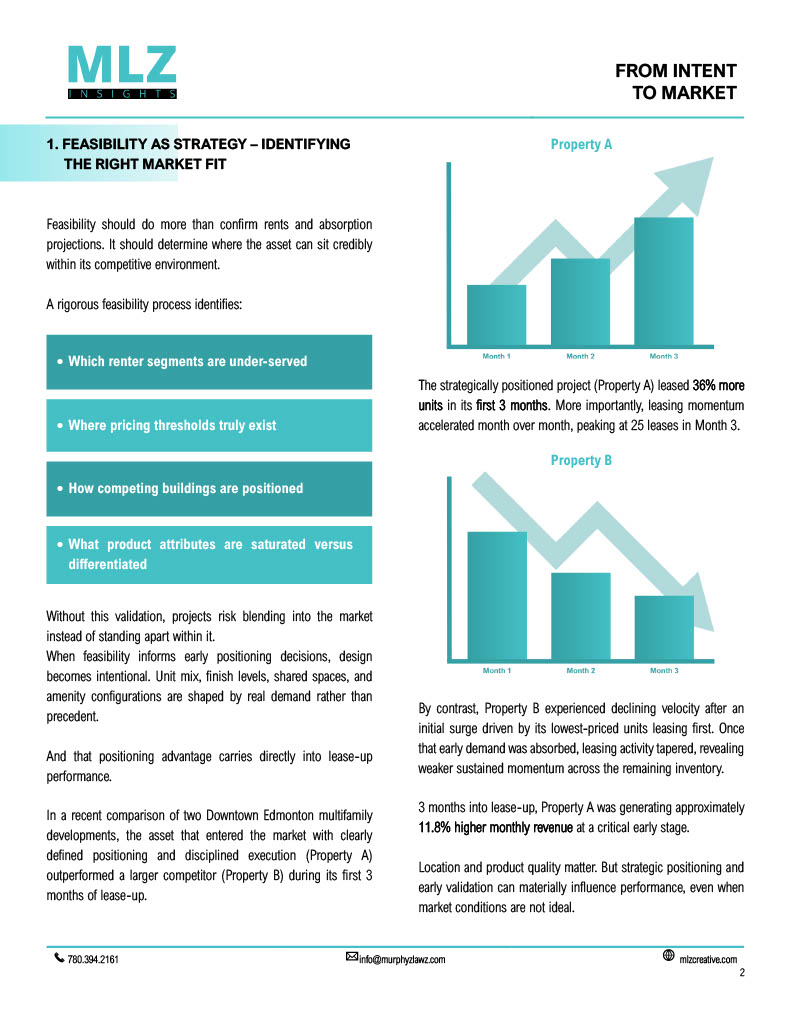
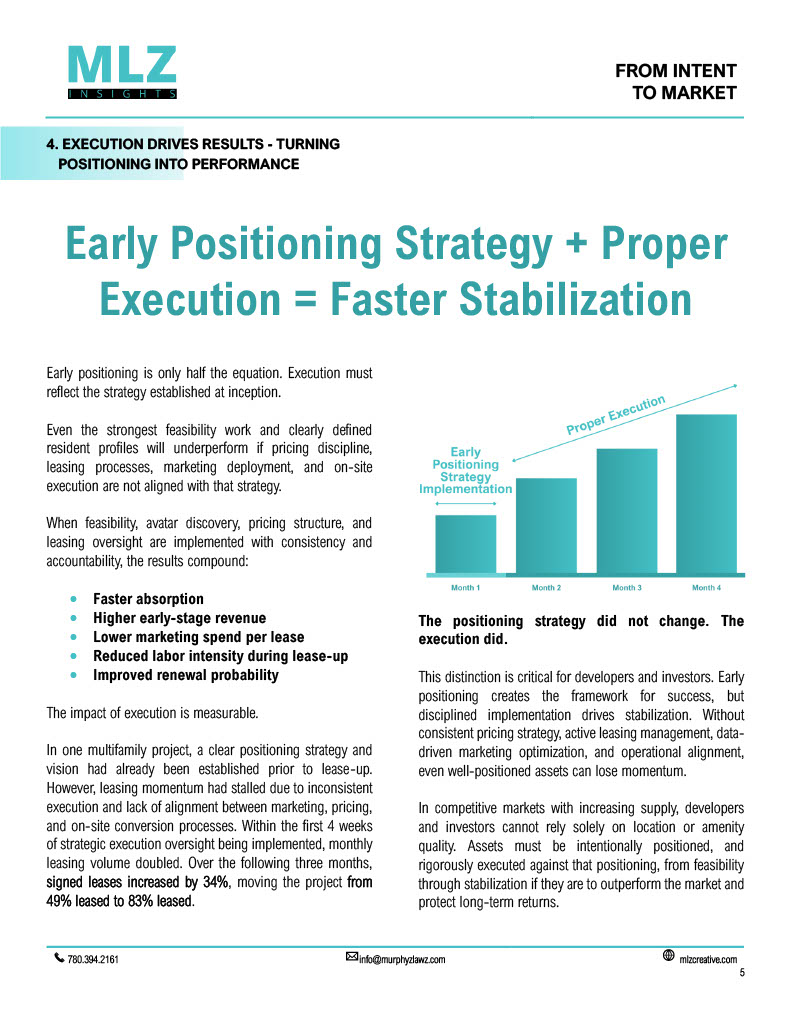
The latest edition of MLZ Insights explains why early and intentional positioning is critical in multifamily development. Rather than relying on branding, positioning is defined as making strategic decisions during feasibility and planning about who the building is for and how it will compete in the market. When developers fail to do this early, the market assigns the building a default identity, often leading to discounting, slow lease-up, and operational challenges.